

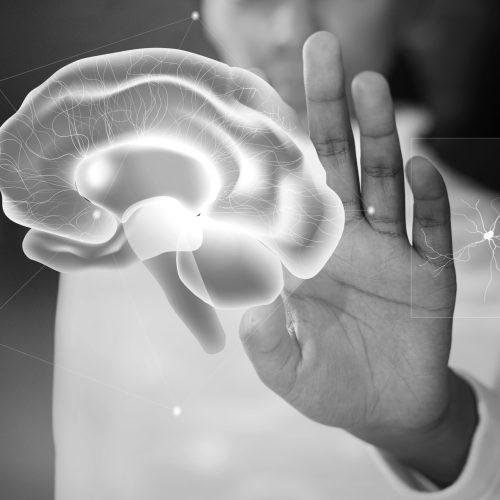
Our brains are intricate, adaptive systems made up of approximately 86 billion neurons, constantly firing and forming connections in response to our experiences, thoughts, and actions. Each day, we generate an estimated 60,000 to 80,000 thoughts, and research suggests that 80% of these tend to be negative, with 95% being repetitive. While this may seem discouraging, it’s not a flaw—it’s a survival strategy rooted in evolution, designed to keep us alert to danger.
But over time, these repeated negative thoughts can carve deep grooves in our neural pathways, reinforcing patterns of fear, self-doubt, or hopelessness. The more we replay the same thought, the more automatic it becomes—like a well-worn path our mind slips into without conscious effort.
This process is summed up by the phrase: “neurons that fire together, wire together.” Each time we think a thought or repeat a behaviour, the brain strengthens the connections associated with it. This is how habits—mental or behavioural—are formed. And just as our brain learns and adapts through repetition, it can also unlearn and rewire.
Here’s the empowering truth: the brain is not fixed. Through a phenomenon known as neuroplasticity, the brain can reorganise itself, forming new neural connections in response to new experiences, learning, and conscious effort. This means that even long-standing thought patterns can be changed.
Picture a dense forest with a single well-trodden trail. That’s your current pattern. Now imagine carving a new path—at first, it feels unfamiliar, overgrown, uncertain. But with each step, the trail becomes clearer. With consistent practice, this new path can become your new default.
When we begin to replace self-critical, fear-based thoughts with more supportive, empowering ones, we lay down new neural tracks. The brain responds not just to what’s repeated, but to what’s emotionally significant and consistently reinforced.
This doesn’t mean toxic positivity or pretending everything is okay. It means gently noticing when we’re stuck in a loop—and making a conscious choice to introduce a different message. Over time, this practice can reduce emotional reactivity, enhance resilience, and expand our capacity for hope, calm, and joy.
The brain generates enough electrical energy to power a small lightbulb. That’s how alive, responsive, and powerful this organ is. And this power is mostly happening beneath the surface—about 95% of our decisions and actions originate in the subconscious.
By becoming aware of our patterns and using tools such as applied neuroplasticity, guided visualisation, mindfulness, and intentional affirmations, we can start to shift the deeper, automatic layers of our thinking and behaviour.
Neuroplasticity isn’t just about self-growth—it’s also central to recovery. In cases of injury or trauma, the brain has the capacity to reassign functions from damaged areas to other regions. This adaptability is what makes healing possible, even in the face of adversity.
In mental and emotional healing, this same principle applies. By creating safe, repeated, emotionally resonant experiences—whether through therapy, self-practice, or meaningful relationships—we can reshape how our brain responds to stress, pain, and uncertainty.
The brain is not a rigid machine—it’s a living, breathing landscape that responds to where we place our attention, energy, and care.
If you find yourself stuck in old patterns of thinking, know this: you are not broken—you are wired for adaptation. And with consistency, patience, and support, your brain can learn new ways of being. This is not a quick fix, but a long game rooted in self-compassion, safety, and practice.
Every small step counts. Every moment you notice and gently redirect a thought, you’re laying a new foundation. You’re not just changing your mind—you’re training your brain.
Author: Kathy Hughes
Image: Freepik