

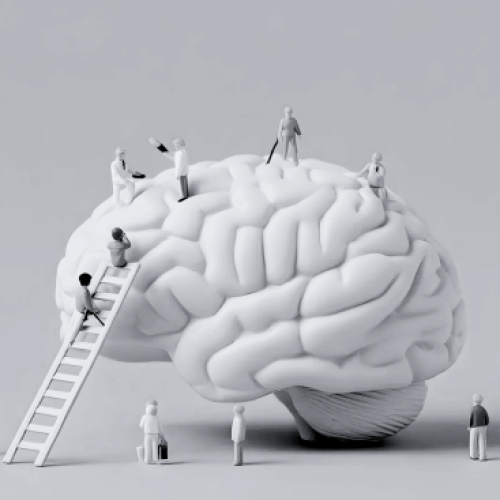
Neuroplasticity refers to the brain and nervous system’s ability to change in response to experience. It is often discussed in the language of motivation, mindset, or effort — as though change happens simply because we decide it should. In reality, the nervous system operates by a very different logic. The brain does not reorganise itself because something is understood once, or even because it is deeply desired. It reorganises itself around what is experienced repeatedly, in ways that feel safe enough to stay with.
This is why meaningful change so often feels slow — and why many people begin to doubt themselves long before anything visibly shifts.
Lasting neuroplastic change is not created through intensity or force. It is created through repetition and permission. The nervous system learns from what it encounters again and again across thought, emotion, imagery, bodily sensation, and response. Whatever is practised most frequently becomes what the brain begins to trust.
Intention plays a role in choosing direction, but it does not determine what the brain rewires around. The nervous system does not respond to how much effort is applied, or how strongly change is desired. It responds to frequency.
This is why people can feel as though they are trying very hard — doing the “right” practices, gaining insight, understanding their patterns — yet still find themselves returning to familiar reactions under stress. The brain is not resisting change. It is simply reinforcing what it recognises.
Familiar does not mean healthy or comfortable.
Familiar means predictable.
From a neuroplasticity perspective, the brain organises itself around what feels reliable. If anxiety, bracing, shutdown, or hypervigilance are the most frequently experienced internal states, the nervous system will continue to default to them — not because it prefers them, but because it knows how to function there.
Many people who struggle with long-standing patterns already have a high degree of self-awareness. They can identify triggers, explain their history, and name what is happening in real time. And yet, the body reacts anyway.
This disconnect is not a failure of insight. It reflects how learning works at the level of the nervous system.
Insight alone does not rewire neural pathways. The brain updates itself only after it has experienced something different often enough to trust it. Until that threshold is crossed, the nervous system will continue returning to old loops — not as resistance, but as protection.
This is why change cannot be rushed. The nervous system does not speed up because it is pressured. It shifts when it has gathered enough evidence that a new response is viable.
Neuroplastic change requires more than repetition. It requires safety.
If a new behaviour, emotional state, or internal response feels overwhelming or threatening, the nervous system will not integrate it. Instead, it will revert to familiar survival patterns. This is not avoidance or self-sabotage. It is how the system protects itself.
For many people, attempts at change fail not because they lack discipline, but because the nervous system is asked to move faster than it can tolerate. Effort without safety often reinforces stress rather than rewiring it.
Learning happens when new experiences are repeated gently, within a window the nervous system can stay present with. Regulation is not the end goal here — it is the condition that allows learning to occur.
This is where neuroplasticity-based brain retraining approaches can become relevant. Brain retraining is often misunderstood as forcing positive thinking or overriding fear responses. In its more grounded form, it is neither of these.
At its core, brain retraining is about repeatedly offering the nervous system alternative experiences — moments of steadiness, clarity, or emotional safety — in a way that does not overwhelm the system. Rather than asking the brain to abandon old patterns prematurely, it focuses on building enough repetition for new pathways to become familiar.
When approached with pacing and care, brain retraining works with the nervous system’s learning process. Over time, the system gathers sufficient evidence to update what it expects — not through pressure, but through consistency.
This distinction matters, especially for people who have tried many strategies and still feel their body reacting as though the danger has not passed. In these cases, the issue is rarely motivation or effort. It is that the nervous system has not yet experienced enough safe repetition for change to consolidate.
One of the most disorienting phases of neuroplastic change is the absence of immediate proof. Early on, it can feel as though nothing is happening at all. This is often when doubt appears — maybe this isn’t working, maybe I’m doing it wrong, maybe change just isn’t possible for me.
In reality, this phase is not a lack of progress. It is the phase where learning is consolidating.
The nervous system is collecting data quietly. Each time an old reaction is interrupted, each moment of steadiness, each experience of emotional safety — even brief ones — becomes evidence. These experiences begin to compete with established neural pathways.
The shifts are subtle at first. A slightly softer reaction. A quicker return to baseline. A moment of relief that wasn’t there before. These are not insignificant changes. They are early signs that the brain is learning.
Neuroplastic change is not about getting it right every time. It is about returning to the practice often enough for the nervous system to recognise a new option.
Each repeated experience of steadiness or choice tells the brain something important: this is available. Over time, these experiences accumulate. The nervous system begins to organise itself around them — not because they were forced, but because they became familiar.
Eventually, effort gives way to ease. What once required conscious intention begins to happen more naturally. The system no longer needs constant reminders to choose differently — it begins to do so on its own.
This is how change stabilises.
Every pattern your brain holds was shaped through repetition, adaptation, and the need to survive. Nothing about your nervous system is broken. Anything learned can be relearned.
Being in the slow phase of change does not mean you are behind. It means you are in the part of the process that actually creates lasting rewiring.
For some people, staying with this phase independently is manageable. For others — especially those living with long-standing stress patterns, chronic symptoms, or nervous systems that have been in survival mode for years — having structure, pacing, and guided repetition can make the process more sustainable.
A structured neuroplasticity-based brain retraining programme offers a container where this learning can unfold gradually. Not by pushing change, but by supporting the nervous system to experience safety and repetition consistently enough for new patterns to take root.
Neuroplastic change does not announce itself loudly. It accumulates quietly — moment by moment, choice by choice — until one day, the proof is no longer something you are looking for.
It is something you are living.
Author: Estee Ling
Image: Oksana Latysheva