
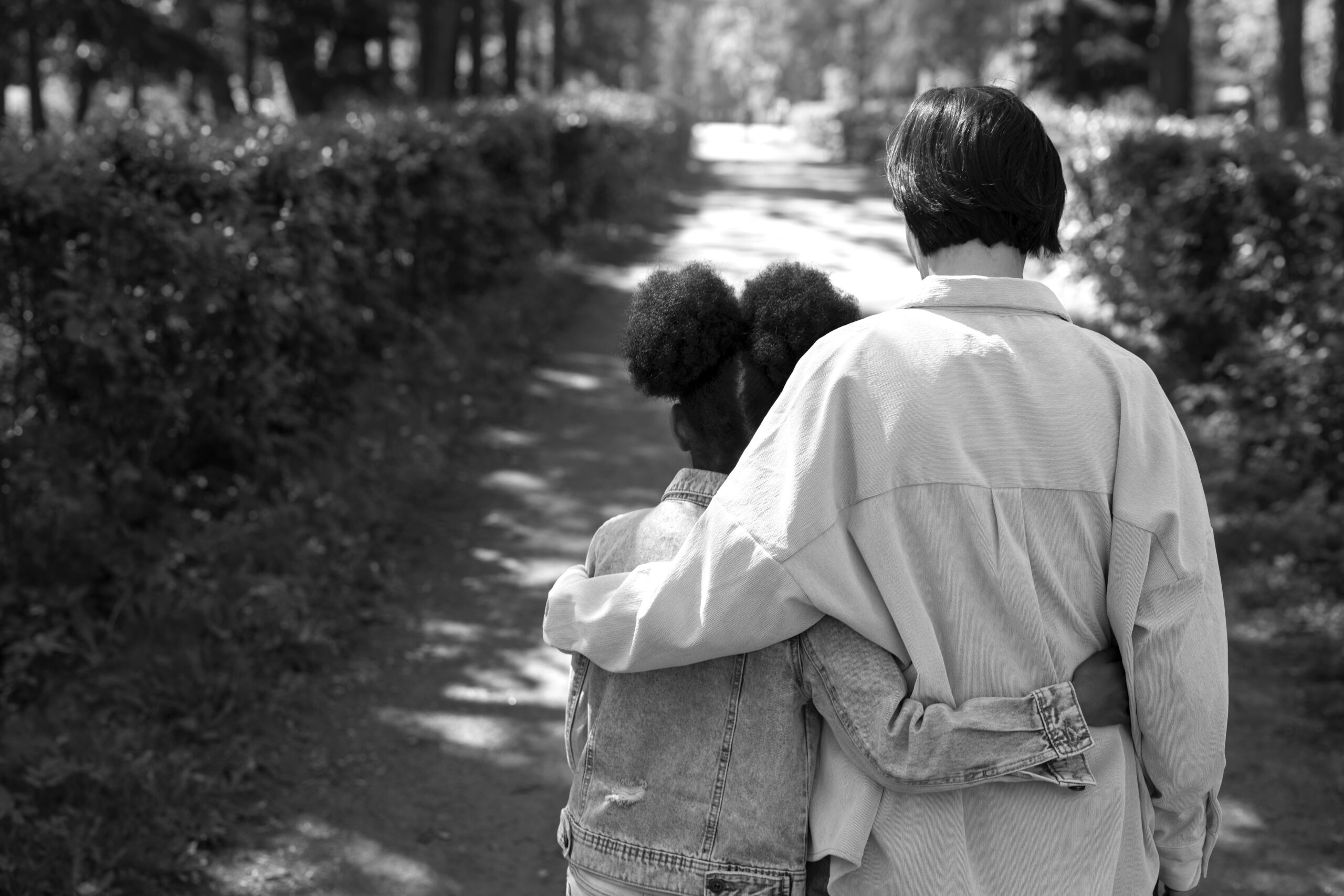
Grief and loss are part of being human. They are not signs that something has gone wrong — but rather signals that something deeply meaningful has been lost. Whether we’re grieving a loved one, the ending of a relationship, a pet, a life we imagined, or even a version of ourselves that we had to leave behind — grief asks to be felt, not fixed.
Yet in a world that often expects quick recovery and polished responses, many find there is little room for the messiness of grief. Grief can feel isolating not just because of the loss itself, but because of how rarely we’re given safe, nonjudgmental space to express it. The truth is: grief doesn’t follow a linear path. It doesn’t unfold in neat stages or have a tidy ending. It comes in waves. It reshapes us.
In short — grief is as wide as human experience itself.
Â
Grief doesn’t always look like mourning at a funeral. It doesn’t always come with tears. Sometimes it looks like numbness. Sometimes it sounds like, “I should be over this by now.” And often, it lives quietly in our nervous systems — unspoken, unacknowledged, but very present.
Some forms of grief are visible and socially recognized. Others are quieter, hidden, or invalidated by others. But all forms of grief leave their mark — in our minds, bodies, routines, and relationships.
Â
Â
Grief is not one-size-fits-all. If it matters to you, it matters. And your pain deserves space.
Â

Â
You may have heard of the five stages of grief: denial, anger, bargaining, depression, and acceptance. These stages, introduced by Elisabeth Kübler-Ross, were never meant to be a strict formula — they were originally observed in people facing terminal illness, not necessarily meant to map the entire grieving experience. Yet over time, they’ve become a kind of cultural shorthand for how we think grief is “supposed” to unfold.
But real-life grief rarely follows this sequence neatly.
You might find yourself skipping a stage, circling back, or feeling all five in a single day. You might never feel “anger,” but instead experience anxiety, guilt, or numbness. Or you might feel a sense of acceptance while still deeply grieving what’s been lost. None of that means you’re doing it wrong.
What the five stages don’t often capture is how anxiety weaves its way through grief — how it can arise from the disorientation of life after loss, the unpredictability of what’s next, or the pressure to “move on” before you’re ready. You might notice:
Â
Â
These reactions aren’t just mental — they’re nervous system responses. Your body is trying to make sense of a world that no longer feels the same.
Understanding that anxiety is often part of grief helps take the shame out of it. It allows space for the full emotional landscape — messy, layered, and valid.
Grief isn’t always about sadness alone. Sometimes it’s confusion. Sometimes it’s panic. Sometimes it’s a blankness that feels like nothing at all.
Whatever it looks like for you, you’re not doing it wrong.
Â
Grief touches every part of us — not just the mind, but the nervous system, the body, our sense of time, and how we relate to the world.
Grief may feel like:
Â
Â
Grief also activates survival responses. Fight. Flight. Freeze. Fawn. You may find yourself trying harder to be okay, avoiding reminders of your loss, or feeling shut down. These are not flaws — they’re your body’s way of navigating something that feels too much, too fast, or too soon.
Â
Grief needs space. It needs witnessing. It needs to be held — not rushed, silenced, or reframed into silver linings too soon.
Phrases like “they’re in a better place” or “everything happens for a reason” might be meant to comfort — but they can land as minimizing when you’re still sitting in the rawness of your pain.
Grief is not a problem to solve. It’s a process to tend.
When grief is met — in a safe space, with a compassionate other, or even within ourselves — it begins to move. Not away, but through. And as we feel safe enough to feel, we begin to integrate, honor, and slowly make space for life around the loss.
What helps is:
Â
Â
Grief exists because love exists. Because attachment lives in our bodies and nervous systems. When we lose something or someone we’ve been bonded to, that rupture reverberates through every part of us.
Pet loss, for example, is often minimized — but it shouldn’t be. Pets are not “just animals.” They are companions, protectors, and quiet witnesses to our lives. When they go, it can feel like the loss of a family member, or the closing of a chapter. That grief is real. And it deserves real care.
But grief isn’t always about death.
We grieve relationships that ended, and the ones that never truly began. We grieve childhoods we didn’t get to have. The belonging we never found. The self we left behind in order to survive. The milestones we didn’t reach. The futures we dreamed of but had to let go.
Sometimes we grieve joy — because it reminds us of what we once had, or who we don’t have with us anymore.
These losses don’t always come with funerals or sympathy cards. But they live in the body — in exhaustion, in irritability, in sudden waves of emotion. They deserve to be named. They deserve to be held.
Grief is not a sign of weakness. It’s a sign that something mattered.
Â
At Sol Therapy, we honour the full range of human grief — from death and heartbreak, to ambiguous losses, identity shifts, and the quiet sorrows of unmet needs.
We know that grief doesn’t live only in the mind — it lives in the nervous system, in the relationships we hold, in how we feel safe (or not) in the world.
Whether you’re navigating fresh grief, long-term mourning, or not even sure if what you’re feeling “counts” as grief — you’re welcome here.
You don’t have to know what to say. You don’t have to be okay. Just show up as you are — and we’ll meet you there.
Grief affects not just what we feel, but how we make sense of the world. Psychotherapy offers a structured, verbal space to explore the impact of loss on your thoughts, emotions, beliefs, and identity. For many, talking through their experience—naming it, mapping it, and connecting the dots—can create clarity, understanding, and relief. This approach can be especially supportive for those who process through reflection, insight, and meaning-making. It can also offer tools for navigating anxiety, relational strain, and inner conflict that often accompany grief.
Grief doesn’t just live in the mind—it’s felt in the body. This modality focuses on the nervous system’s responses to loss, helping individuals notice and work gently with sensations such as tightness, collapse, shutdown, or restlessness. By tracking what’s happening in the body and co-regulating with a compassionate therapist, clients can slowly expand their capacity to be with difficult feelings, while anchoring in safety. This approach honours that grief can stir trauma responses and supports clients in moving through it without overwhelm.
Clinical hypnotherapy works with the subconscious mind to create internal safety, reduce inner resistance, and access supportive inner resources. It is especially helpful when grief feels stuck, confusing, or too painful to touch directly. Through deep guided relaxation and gentle suggestion, hypnotherapy can support the body in shifting out of protective patterns like dissociation or shutdown. It can also strengthen the capacity to feel grief without becoming consumed by it, allowing space for integration and healing.
Grief often disrupts our inner rhythms—sleep, digestion, breath, and energy. BCST offers a gentle, hands-on way to support the body’s return to balance. This non-invasive modality works with the body’s natural healing intelligence and subtle rhythms, helping settle the nervous system and ease physical tension or emotional holding. For those who feel overwhelmed or emotionally fatigued, BCST provides quiet support to process grief in a way that’s deeply restorative, without needing to talk.
Grief can leave the body feeling stuck—frozen in place, disconnected, or full of energy that has nowhere to go. Therapeutic breathwork and movement offer a safe way to reconnect with the body, release tension, and restore a sense of flow. Through conscious breathing and intuitive, grief-sensitive movement, clients can begin to express emotions stored in the body and reconnect with a sense of vitality or grounding. These practices can complement other therapies by gently supporting nervous system regulation, emotional release, and body-based integration.
If your grief feels heavy, stuck, confusing, or is affecting your ability to function, relate, or feel safe—grief therapy may help. You don’t have to wait until it becomes “too much.” Sometimes, having a space where your grief is witnessed without judgment can be deeply healing on its own.
All grief is complex. But when grief becomes so prolonged, intense, or disruptive that it’s hard to engage in daily life, it may be what some call complicated grief. Still, we believe grief isn’t something to be diagnosed—it’s something to be met, supported, and gently understood in its own time.
Yes. Especially if the loss was sudden, violent, unresolved, or layered with other life stressors. You might experience dissociation, hypervigilance, numbness, or even physical symptoms. Grief and trauma often overlap—and a trauma-informed approach can help you tend to both with care.
Completely. Many people feel pressure to “move on” quickly. But grief doesn’t have an expiration date. Feeling sad doesn’t mean you’re stuck—it means the loss mattered. Guilt often comes from external expectations, not from anything you’ve done wrong.
Grief often brings up secondary losses—like losing routines, identity, community, or roles we held. It may also stir up ungrieved past pain or echo old losses. This is normal. Your nervous system may be processing multiple layers at once.
Not necessarily. Some people go numb in grief. Some get busy. Others feel anger, confusion, or even relief. Grief doesn’t always look like sadness. It can show up in the body, in sleep patterns, in how you relate to others. There is no one right way to grieve.
Absolutely. Many people grieve the childhood they didn’t get, the parent who couldn’t show up, the life they hoped for but never lived. These invisible or ambiguous griefs are very real—and they deserve space and care, just like any other loss.
Grief can disrupt your sense of safety, routine, and meaning. That kind of upheaval can activate the nervous system, leading to anxious thoughts or physical symptoms. You’re not broken. Your system is responding to a profound change. With support, it can settle again.
Yes. You don’t need to have the right words, a timeline, or a clear plan. You only need to show up as you are. Together, we can explore what’s been lost, what still feels tender, and what kind of support might feel most nourishing in this season of your life.
Grief therapy doesn’t follow a script. It isn’t about helping you “get over” your loss or arrive at closure. Instead, it offers a compassionate, safe, and co-regulated space to be with whatever is true for you — whether that’s sadness, confusion, anger, numbness, or even relief. A grief-informed therapist walks alongside you, not to fix the pain, but to help you hold it in a way that feels right and resonating for you.
Some sessions may support you in gathering and building internal resources — practices, anchors, or reflections that help you feel just a little more grounded amidst the waves. Others may gently explore memories or the ache of what’s been left unsaid. Sometimes, the focus is on how grief is living in your body — the heaviness, the restlessness, the shutdown.
Over time, therapy can help you make meaning of your experience, reconnect with parts of yourself that feel distant, and begin to carry your grief with more gentleness. It’s not about moving on — it’s about moving forward, in a way that honours your loss, supports your nervous system, and makes room for your truth to be held, exactly as it is.
For more information on Grief and Loss Therapy in Singapore, please WhatsApp us at (65) 89422211 or email us at beinghuman@soltherapy.sg
"When we numb darkness, we numb light."
- Brené Brown