

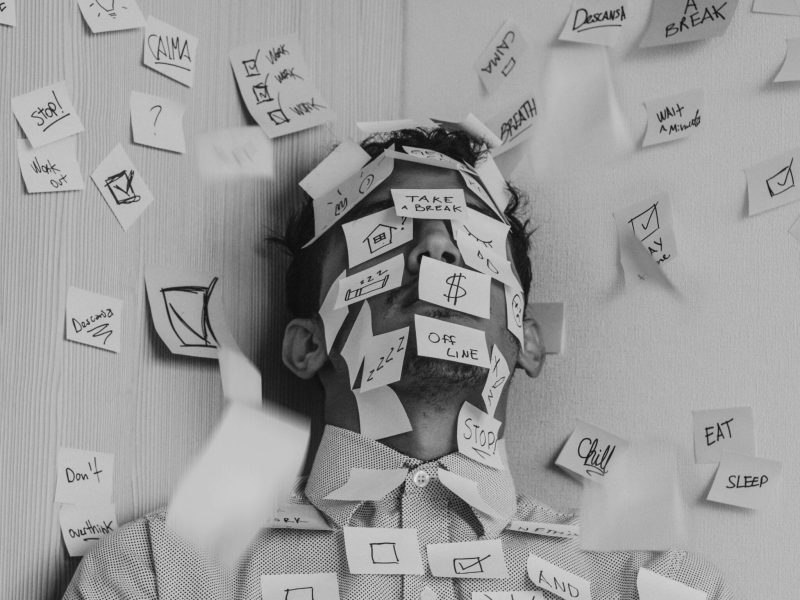
Chronic stress occurs when the body remains in a prolonged state of tension, affecting both mental and physical health over time
.
Chronic stress is more than just feeling overwhelmed. It’s what happens when the nervous system stays in a prolonged state of alert—without the opportunity to fully rest, recover, or return to a felt sense of safety. Over time, the body begins to operate as if threat is ongoing, even in the absence of immediate danger.
What once served as a short-term survival response becomes the baseline. This can leave a person feeling stuck in tension, exhaustion, or emotional overdrive—what some describe as “being constantly on edge” or “never truly able to relax.”
From a trauma-informed perspective, chronic stress is not a failure of willpower or resilience. It’s the body’s way of adapting to what it has been through—holding on, bracing, coping, and trying to protect itself in the best way it knows how.
According to the World Health Organization, chronic stress has become one of the leading contributors to the global burden of disease. It’s estimated that up to 75–90% of all visits to primary care providers are related to stress-linked concerns, reflecting the depth of its impact on both physical and emotional health.
The effects of chronic stress are often wide-ranging and impact multiple areas of life. These symptoms aren’t “just in your head”—they are physiological responses that reflect how the body is trying to cope.
When left unaddressed, chronic stress can contribute to long-term issues such as autoimmune conditions, chronic pain, cardiovascular concerns, hormone dysregulation, or burnout.
Chronic stress isn’t just “in the mind”—it lives in the body. When we face stressors, our nervous system instinctively responds through survival states often referred to as fight, flight, freeze, or fawn. These responses are adaptive and protective, designed to help us respond quickly to perceived threats.
But when stress is constant, unresolved, or paired with trauma, the body may not get the message that the danger has passed. Over time, the nervous system begins to operate as though high alert is the baseline. Muscles remain tense, digestion slows, sleep becomes disrupted, and the mind struggles to rest—because safety hasn’t yet been reestablished from the inside out.
For many, especially those with a history of trauma or long-term overwhelm, stress regulation becomes more about survival than restoration. And in these cases, “calming down” isn’t something the body can simply will itself to do. The stress response stays on—because it once had to. The body is trying to protect, even when it no longer needs to.
This is not a sign of weakness. It’s a reflection of a nervous system doing its best, based on what it has learned.
When the stress response is left on for too long without support, it can start to wear down multiple systems in the body and mind. What begins as a survival mechanism can evolve into chronic dysregulation.
Prolonged, unaddressed chronic stress can lead to:
Without intervention, this cycle can deepen. But the good news is: it can also be interrupted—with care, safety, and consistent support.
We work gently and holistically to support the body and mind in coming out of survival mode. Our integrative therapies offer space to release what the body is holding, process what’s beneath the stress, and rebuild a sense of internal safety.
Some of the approaches we offer include:
You don’t have to push harder to feel better. Sometimes, healing begins with slowing down, listening to the body, and allowing space for what has been held in for too long.
Through compassionate support and trauma-aware care, you can begin to feel safer in your body, more regulated in your responses, and more connected to yourself and the world around you.
Psychotherapy and counselling provide a compassionate space to explore the underlying roots of chronic stress. Together with your therapist, you’ll identify recurring thought patterns, emotional triggers, and behavioral responses that may be contributing to your distress. Through gentle inquiry and reflection, therapy supports the development of healthier internal narratives, more adaptive responses, and deeper self-understanding—helping you increase emotional resilience, regulation, and a renewed sense of agency.
Breathwork and movement therapy combine intentional breathing practices with gentle, personalized movements to help regulate the nervous system. Whether used alone or alongside other therapies, these embodied approaches support oxygenation, release muscle tension, and bring the body into greater states of calm and presence. Movement helps discharge excess stress stored in the body, while breath signals safety to the nervous system—shifting you out of fight-flight-freeze-fawn modes and into a more grounded, resourced state. Together, they restore connection to the body, enhance emotional processing, and promote mind-body integration.
This gentle, hands-on therapy works with the body’s subtle rhythms to support balance and self-regulation. Through light touch and deep listening, practitioners support the body in releasing stress patterns, easing tension, and activating the parasympathetic nervous system. Over time, this therapy can reduce the physiological effects of chronic stress, support nervous system resilience, and invite a felt sense of restoration.
Clinical hypnotherapy helps individuals access the subconscious mind to shift unhelpful thought loops, internalized stress responses, and core beliefs contributing to chronic tension. Through guided hypnosis, clients can learn to reframe their experience of stress, strengthen positive coping strategies, and build inner calm. This approach focuses on what’s possible—supporting a movement away from reactive patterns and toward intentional, empowered ways of responding.
Chronic stress often has roots in unprocessed or stored trauma in the body. Trauma-informed Relational Somatic Therapy works by bridging talk therapy with body-based practices, allowing individuals to gently track and release stored survival responses. This process unfolds at a pace that honors nervous system readiness and supports deep self-awareness, offering a path to regulation, reconnection, and embodied safety.
Grounded in neuroplasticity, the Neuro-Alignment Program uses both cognitive and somatic techniques to retrain the brain’s response to stress. Through consistent practice of targeted mental exercises and embodiment tools, individuals can reshape the neural pathways that maintain chronic stress responses. Rather than overriding symptoms, this approach works with the brain’s innate adaptability to promote resilience, emotional flexibility, and long-term regulation.
These standalone sessions offer a nourishing pause amidst the demands of life. Designed as a reset for the nervous system, they weave together breathwork, intentional movement, somatic awareness, neural-emotive regulation tools, and grounding touch. While not a substitute for clinical therapy, they serve as a complementary offering to deepen self-compassion, recalibrate the body, and reconnect with presence. Many find these sessions to be a meditative space to exhale, soften, and return to themselves.
Psychosomatic Therapy is a gentle, touch-based approach that supports the recalibration of the mind-body system. Grounded in the understanding that unresolved emotional patterns and life experiences can manifest physically, this therapy helps individuals attune to the body, process stored tension, and restore a sense of internal balance. Through subtle touch and presence, it facilitates regulation of the nervous system and fosters emotional and physical integration. When used alongside psychotherapy, clinical hypnotherapy, or somatic work, Psychosomatic Therapy offers a deeply restorative space for rest, recalibration, and reconnection with the body’s innate capacity for healing.
Yes. Chronic stress often depletes your emotional and physical reserves, leaving you feeling persistently tired, even after rest. This exhaustion isn’t a weakness—it’s your body’s way of signaling that it’s been carrying too much for too long. In therapy, we don’t push the body to “do more,” but rather listen to what it’s trying to express and support restoration at your pace.
That’s okay. Chronic stress doesn’t always come from a single event. Sometimes it builds slowly from long-term pressures, invisible burdens, or even patterns we’ve carried since childhood. Therapy helps gently uncover what your body and mind may have been holding—without forcing or rushing the process.
Absolutely. Prolonged stress can impact sleep, digestion, immunity, memory, and even hormonal balance. The body is deeply interconnected with our emotional world. Symptoms aren’t “all in your head”—they’re real signals from a system that’s been trying to adapt and survive. Supportive care helps you regulate, restore, and reconnect with your body’s wisdom.
When your nervous system is in survival mode, logic alone may not bring relief. Chronic stress lives in the body as much as in the mind. That’s why we combine gentle somatic approaches, breathwork, and psychotherapy—to support both insight and embodied safety. Regulation begins by meeting your system where it’s at, not where it “should” be.
Healing from chronic stress is not linear and looks different for everyone. You might notice small shifts early on—like breathing more easily or sleeping better—and deeper change unfolds with time, consistency, and care. We work at your pace, focusing on sustainable relief, not quick fixes or forced outcomes.
That experience is valid. Not all therapies or therapists feel like the right fit. Our integrative approach focuses on safety, attunement, and nervous system regulation—blending talk therapy with body-based tools. Many clients find that combining modalities gives them more access to change, especially when past attempts felt stuck or overly cognitive.
With the right support, many people do experience deep and lasting change. Recovery doesn’t always mean going back to how things were—but learning to live in a more regulated, connected, and self-compassionate way. Therapy helps you expand your capacity, reconnect with yourself, and build a new relationship with safety, rest, and vitality.
These responses—often known as Fight, Flight, Freeze, and Fawn (FFFF)—are the nervous system’s natural ways of trying to stay safe. They are not flaws or signs of weakness, but adaptive responses to overwhelm, especially if you’ve had to survive under prolonged stress or trauma. In therapy, we gently work with these responses, helping your body recognize when it’s safe again and expanding your capacity to respond rather than react.
Everyday stress is part of life—it ebbs and flows and typically resolves once the stressor passes. Chronic stress, however, lingers and accumulates. It often doesn’t go away with rest and can start to impact sleep, mood, focus, or the body itself. If stress feels like a constant undercurrent or is interfering with daily life, it might be time to seek support.
Yes. Unattended chronic stress can contribute to issues like high blood pressure, weakened immunity, gut disturbances, hormonal imbalances, chronic pain, and even autoimmune conditions. The mind and body are deeply interconnected. By addressing chronic stress gently and holistically, we support both emotional and physical well-being.
At Sol Therapy, therapy focuses on restoring balance across both mind and body.
Support includes:
A stress management therapist provides structured guidance to help reduce overwhelm, improve resilience, and support long-term wellbeing.
For more information on our services that offers therapy for Chronic Stress management in Singapore, please WhatsApp us at (65) 89422211 or email us at beinghuman@soltherapy.sg
"You are allowed to be
both a masterpiece and
a work in progress simultaneously."- Sophia Bush