

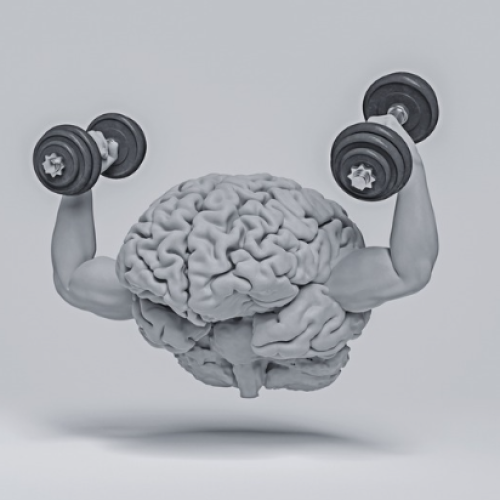
The human brain is far more adaptable than we once believed. For many years, it was widely assumed that the brain became relatively fixed after childhood. Today, research tells a different story. The brain continues to reshape itself through experience, learning, and repetition. This remarkable capacity is known as neuroplasticity.
In a recent feature with FZINE Magazine as part of their GYST series, Sol Therapy’s Director of Clinical Operations, Estee Ling, shared insights on neuroplasticity and how the brain’s ability to reorganise and form new neural connections can influence the way we think, feel, and respond to life’s experiences.
The following reflections were shared during an interview with FZINE Magazine for their GYST series exploring neuroplasticity and the brain’s capacity for change.
At Sol Therapy, we take an integrative clinical approach that honours both the mind and the body. Healing is rarely a one-size-fits-all process, which is why our work emphasises integration and the embrace of the human experience, bringing together different therapeutic perspectives so care can be thoughtfully tailored to each person. While the clinic offers a range of psychological and somatic therapies, my focus within this framework is on neuroplasticity and how we can work with the brain’s natural ability to adapt and change.
I developed a programme called the Neuro-Alignment Programme (NAP), which is rooted in applied neuroplasticity — the brain’s remarkable capacity to reorganise and form new neural pathways throughout life. Many neuroplasticity-based programmes focus primarily on retraining the brain through cognitive exercises. While that can be incredibly helpful, the approach we take integrates trauma-sensitive cognitive neuroplasticity work together with body-based attunement, recognising that our experiences are not only processed in the mind but also held within the nervous system. We also equip clients with practical self-practice tools so they can continue supporting their own healing and cultivate greater self-agency in their everyday lives.
When people go through prolonged stress, trauma, or chronic illness, the brain can sometimes become stuck in certain protective patterns. The brain’s threat detection system, for instance, may become overly sensitised — almost like a smoke alarm that keeps going off even when there is no real fire. Over time, this heightened alarm state can contribute to conditions such as chronic pain, fibromyalgia, chronic fatigue, anxiety, and other stress-related symptoms.
Using the language of the brain, we work to gently retrain these neural pathways. Through psychoeducation, structured cognitive practices, emotional regulation tools, guided imagery, and nervous system awareness, clients learn how to interrupt unhelpful patterns and gradually strengthen new pathways associated with safety, resilience, and regulation.
The goal is not to force the brain to ignore symptoms or simply “think positive.” Rather, we work with the brain’s natural learning system so that over time the nervous system can move out of prolonged survival mode and return to a more balanced, regulated state.
It is also important to recognise that neuroplasticity is something our brains engage in every day. Whenever we learn a new language, practise a skill, or repeat a thought pattern, the brain is forming and strengthening neural pathways. The difference with structured neuroplasticity work is that we are engaging the brain intentionally and consistently, guided by an understanding of how the brain and nervous system function. Often, this work is done with specific goals in mind — for instance when supporting those living with fibromyalgia, chronic fatigue syndrome, chronic pain, or psychosomatic symptoms where the aim is to gently retrain patterns in the brain and nervous system that may have become sensitised over time.
Because of this, proper guidance can be helpful. Working with trained clinicians allows the process to be tailored to the person, particularly when trauma, chronic stress, or long-standing health conditions are involved — ensuring that the work supports both the brain and the body in a safe and sustainable way.
Neuroplasticity refers to the brain’s remarkable ability to adapt, reorganise, and form new neural pathways throughout life.
For a long time, scientists believed that the brain was largely fixed after childhood. But modern neuroscience has shown that the brain is far more dynamic than we once thought. Our brains are constantly reshaping themselves based on our experiences, thoughts, emotions, and behaviours.
Much of my training and interest in this field has been shaped by the work of renowned neuroscientist Dr. Norman Doidge. His research and case studies helped bring the science of neuroplasticity into mainstream understanding, and through his work, he has been an important teacher to many of us who study the brain’s remarkable ability to change.
One helpful way to understand neuroplasticity is to imagine a field of grass with walking paths. If you walk along the same path every day, that trail becomes clearer and easier to follow. The grass stops growing there because it is repeatedly pressed down.
The brain works in a similar way. The thoughts we repeat, the emotional responses we practise, and the behaviours we engage in frequently strengthen certain neural pathways. Over time, those pathways become the brain’s “default routes”.
The encouraging part is that the brain can also create new paths. If we stop walking along the old trail and begin walking a new one, the grass on the old path gradually grows back while the new path becomes clearer. Through repetition and consistency, the brain begins strengthening the newer, healthier pathways.
This discovery has led to remarkable advances in neuroscience. Researchers have demonstrated how the brain can reorganise itself after strokes, help people retrain pain circuits in chronic pain conditions, support people with learning challenges, and allow different areas of the brain to take on new functions when another area has been damaged.
In essence, neuroplasticity is the biological reason learning, recovery, and personal transformation remain possible throughout our lives. Because the brain is always adapting, neuroplasticity is happening continuously, whether we realise it or not. The question is simply which patterns we are reinforcing through repetition.
When we begin to understand how the brain works, we can start working with it more intentionally, strengthening pathways that support resilience, regulation, and wellbeing.
Neuroplasticity is a lifelong ability. While the brain develops rapidly during childhood, research in neuroscience has shown that the brain remains plastic and capable of change throughout adulthood and even into older age.
This discovery has transformed how we understand healing and learning. Early work in neuroplasticity focused on helping people recover from strokes, brain injuries, and neurological conditions by retraining the brain to take on functions that were once thought to be permanently lost. Over time, researchers also began demonstrating how similar principles could be applied to chronic pain, phantom limb pain, learning challenges, and other neurological conditions. Beyond medical and clinical applications, these discoveries also revealed how neuroplasticity shapes our outlook on life — influencing how we think, interpret experiences, and relate to the world around us.
What is fascinating is that neuroplasticity is not only relevant for recovery from illness. It is also deeply connected to how human beings grow, adapt, and rise to challenges.
Many high-performing athletes, musicians, and professionals intuitively train their brains through repetition, visualisation, and mental rehearsal. Olympic athletes, such as free skier Eileen Gu, have spoken about tapping into neuroplasticity and using imagery techniques as part of their training — mentally rehearsing movements and outcomes so that the brain begins strengthening those neural pathways even before the body performs them.
In everyday life, neuroplasticity influences how we think, how we interpret experiences, and how we respond to stress and change. When we begin to work with the brain more intentionally, we can gradually shift patterns that no longer serve us and strengthen those that support resilience, adaptability, and wellbeing.
While the body holds the imprint of past stress or trauma, the brain also gives us a powerful gateway for change. By working with both the brain and the body, we can support a more integrated and sustainable path forward.
In truth, we are engaging in neuroplasticity every single day. The brain is constantly learning from what we repeat.
Whenever we practise a skill, learn a new language, pick up a musical instrument, or repeat certain thought patterns, neural pathways in the brain are being strengthened. Over time, those repeated patterns become more automatic.
Neuroplasticity happens most effectively through repetition, consistency, and emotional engagement. The brain strengthens pathways that are practised regularly. This means both supportive and unsupportive patterns can become reinforced through repetition.
In structured neuroplasticity programmes, we use intentional practices to guide the brain toward healthier pathways. These may include cognitive exercises, emotional regulation techniques, and guided imagery or mental rehearsal, where individuals practise visualising themselves moving toward desired goals or states of wellbeing.
Guided imagery can be particularly powerful because the brain often responds to vividly imagined experiences in ways similar to real ones. When practised with clarity, structure, and repetition, it helps train the mind and body to respond as though the experience is happening in real time, gradually strengthening the neural pathways associated with those patterns.
In essence, neuroplasticity is not about a single activity. It is about consistent practice over time. Just as muscles strengthen through repeated exercise, neural pathways strengthen through repeated mental and emotional patterns.
When we practise neuroplasticity intentionally, we are essentially training the brain to strengthen certain neural pathways over others. The brain learns through repetition. The more frequently we rehearse a particular mental, emotional, or behavioural pattern, the more established that pathway becomes.
This is why practices such as goal visualisation, mental rehearsal, and guided imagery can be powerful tools. When we vividly imagine ourselves moving toward a desired outcome — whether it is speaking confidently in a meeting, completing a project, or achieving a personal milestone — the brain begins activating many of the same neural circuits that would be involved if we were actually performing that action.
With repetition, these circuits become stronger and more familiar to the brain. This helps shape how we think, how we approach challenges, and how we respond when opportunities arise. Instead of defaulting to hesitation or self-doubt, the brain becomes more primed for focus, confidence, and action.
At the same time, neuroplasticity also supports emotional regulation and cognitive flexibility. When the brain is less caught in cycles of stress or overwhelm, it becomes easier to sustain attention, make decisions, and adapt when things do not go as planned.
Over time, this combination of mental rehearsal, emotional regulation, and repeated practice helps align our thoughts, behaviours, and actions toward our goals. This is why many high-performing individuals — including athletes, performers, and leaders — intentionally train their mental patterns as part of their preparation.
Beyond performance, these practices can also contribute to a more balanced life. As the brain strengthens pathways associated with clarity, resilience, and adaptability, individuals often find themselves navigating both personal and professional challenges with greater steadiness and perspective.
Ultimately, neuroplasticity reminds us that our brains are not fixed. With consistent practice, we can gradually shape patterns that support both meaningful goals and a more grounded way of living.
Mindfulness and neuroplasticity are closely connected, but they are not the same thing. Mindfulness is a practice, while neuroplasticity is the brain’s biological ability to change and reorganise itself.
Mindfulness involves intentionally bringing awareness to the present moment — noticing our thoughts, emotions, and sensations without immediately reacting to them. This awareness can help calm and regulate the nervous system, creating space between stimulus and response.
Neuroplasticity, on the other hand, is the mechanism through which the brain learns and reshapes itself over time. Whenever we repeat certain thoughts, behaviours, or emotional responses, the brain strengthens the neural pathways associated with them.
Mindfulness can certainly support neuroplasticity, but it is only one pathway. Learning new skills, engaging in therapy, practising guided imagery, building new habits, and working with emotional regulation are all ways neural pathways can be strengthened.
In our work, we often integrate both perspectives. Awareness practices help individuals notice their patterns, while structured neuroplasticity exercises help the brain actively develop new pathways that support regulation, resilience, and wellbeing.
Ultimately, mindfulness helps us observe the mind, while neuroplasticity gives us the tools to gradually reshape it.
These reflections were originally shared in an interview with Kenme Lam for FZINE Magazine.
The published feature can be viewed here: https://www.fzine.com/culture/gyst-what-is-neuroplasticity?ref=contentblockf
Image: Ofelia Diaconu